From Screens to Swings: How Plazmo Helps Kids Escape the Sedentary Trap
Discover how Plazmo helps children move beyond passive screen habits into fun, energising, and fitness-rich play. Learn how active gaming can beat the sedentary trap and bring movement back into everyday life.
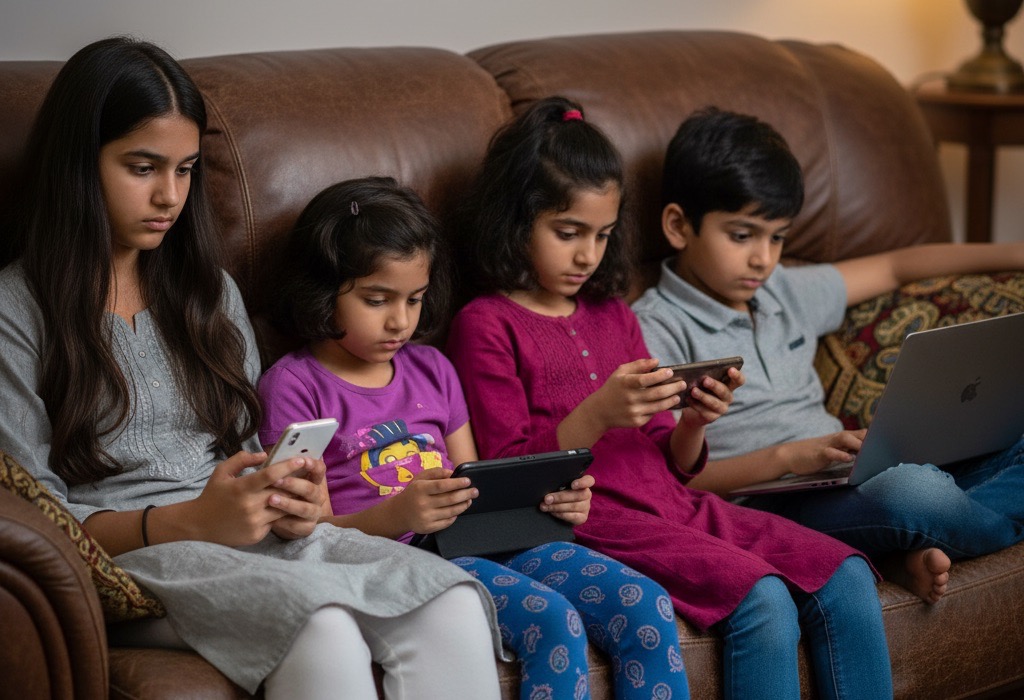
Table of Contents
- The Hidden Risks of a Sedentary Lifestyle for Children
- Why Movement + Play Matters — And Why Traditional Solutions Fall Short
- Introducing Plazmo: Turning Sedentary Time Into Interactive Movement
- The Fitness Benefits of Using Plazmo Regularly
- Addressing Common Concerns
- Final Thoughts
- Frequently Asked Questions (FAQ)
The Hidden Risks of a Sedentary Lifestyle for Children
1 What does “sedentary” mean?
When children spend large amounts of time sitting or reclining—at screens, on couches, or in low-movement settings—they are engaging in sedentary behaviour. This is more than just “not running around”: it’s a lack of meaningful physical movement, which research shows carries independent health risks.
Children are doing this more than ever: classroom time, homework, screen time — the sum is high. In children and youth, frequent screen-time and prolonged sitting have been associated with poorer fitness, lower VO₂max, reduced musculoskeletal strength and worse cardiovascular indicators.
2 Physical health consequences
- Increased risk of overweight and obesity: More than 2 hours of sedentary sitting or screen time per day increases overweight/obesity risk in children.
- Cardiometabolic and cardiovascular risks: Linked to higher blood pressure, elevated cholesterol, insulin resistance, early arterial stiffness and higher risk of future heart disease.
- Weaker bones, poorer musculoskeletal health: Less movement means weaker bone-mineral accrual, posture issues, and reduced muscle strength.
3 Mental and developmental consequences
- Lower self-esteem and mood: Reduced physical fitness correlates with higher depressive symptoms and lower confidence.
- Cognitive and learning impacts: Sedentary behaviour displaces movement and play—both essential for motor coordination and learning readiness.
4 Long-term implications
What starts young doesn’t stay just in childhood. Sedentary habits established early often continue into adulthood—leading to metabolic syndrome, cardiovascular disease, and lifelong inactivity patterns.
Why Movement + Play Matters — And Why Traditional Solutions Fall Short
1 The value of active play
Movement isn’t just about exercise—it’s about play. Running, jumping, stretching, laughing and exploring fuel physical health, coordination, confidence and social skills. For kids, play is the most natural way to stay active.
2 Traditional solutions: limitations
- Parents encourage outdoor time, but time, space, weather, or safety can be constraints.
- Kids are drawn to screens and digital entertainment.
- If “exercise” feels like a chore, motivation quickly fades.
3 The gap for a playful, home-friendly, movement-rich solution
Children need a way to move while enjoying themselves — something that brings together fun, games, and exercise, all within the comfort of home. That’s where Plazmo bridges the gap.
Introducing Plazmo: Turning Sedentary Time Into Interactive Movement
1 What is Plazmo?
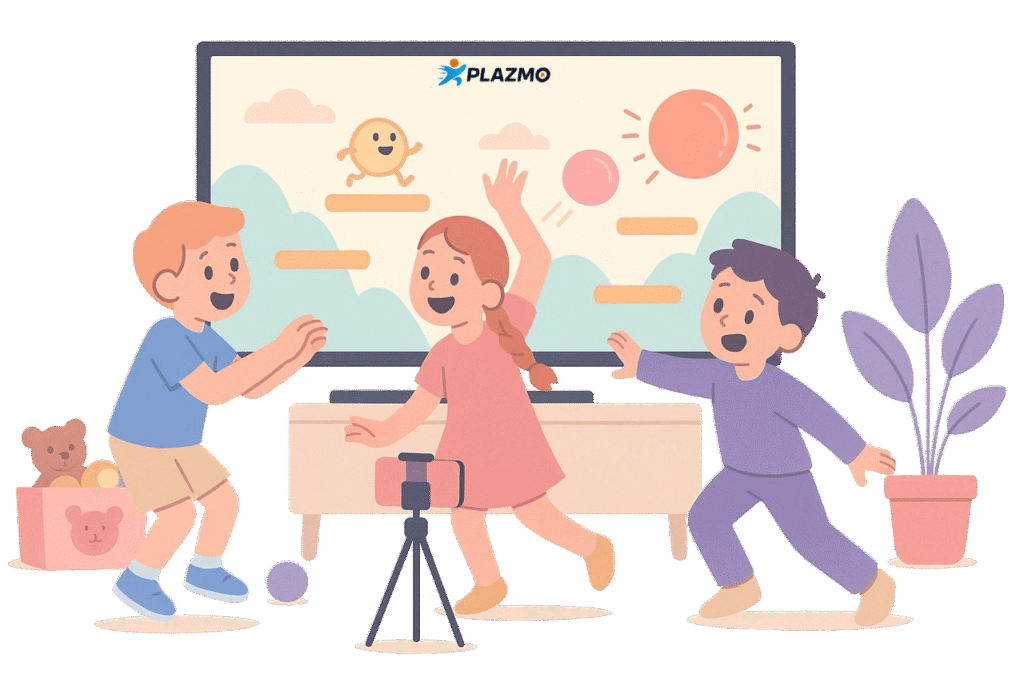
Plazmo is an interactive fitness-gaming solution designed for children. It uses body-tracking and fun challenges to turn passive sitting into exciting active play—helping kids stay fit without realizing they’re exercising.
2 How Plazmo addresses the sedentary challenge
- Active engagement: Games require jumping, reaching, dodging, and dancing—not sitting.
- Screen + body connection: Screen time becomes movement time through full-body interaction.
- Motivation & gamification: Levels, scores, and progress tracking make activity rewarding.
- At-home flexibility: Works in living rooms or small play areas—no gym needed.
- Breaks long sitting spells: Encourages movement breaks between study or entertainment sessions.
3 Example game scenarios
- Jump Quest: Kids jump to reach targets or time-based cues.
- Smash It: Hand movement-based games for coordination and reaction time.
- Buddy Bounce: Fun routines that encourage full-body movement.
The Fitness Benefits of Using Plazmo Regularly
1 Improved cardiorespiratory and musculoskeletal fitness
Replacing sitting time with active gaming helps kids build cardiovascular health, muscular strength, and stamina. Studies confirm that reducing sedentary time improves overall fitness levels in youth.
2 Better body composition and reduced obesity risk
By encouraging regular energy expenditure, Plazmo helps maintain healthy weight and lean muscle mass. Game-based activity can meaningfully offset the effects of long sitting periods.
3 Cognitive, emotional and behavioral benefits
Physical activity boosts confidence, improves mood and focus, and reduces behavioural issues. Active gaming nurtures these benefits while keeping fun at the forefront.
4 Establishing lifelong movement habits
When movement becomes play, kids associate activity with joy—not obligation. This helps establish lifelong healthy habits extending into adolescence and adulthood.
Addressing Common Concerns
- “But my child already plays video games”: Plazmo replaces passive play with movement-based gaming.
- “What about safety?”: Use safe open spaces and supervise younger children.
- “We don’t have much space”: Plazmo works even in modest living rooms with low-impact games.
- “Will it replace outdoor play?”: No—outdoor play is irreplaceable, but Plazmo complements it perfectly indoors.
- “Doesn’t it still add screen time?”: The key is transforming screen time into active time—not adding more passive hours.
Final Thoughts
In today’s digital world, sedentary behaviour among kids is a growing concern. But the solution doesn’t have to be boring or forced. With Plazmo’s movement-based play, families can turn idle sitting into energy-filled fun, build healthy habits, and make activity a joyful part of daily life. When kids say, “Can I play Plazmo?”—they’re really asking, “Can I move and have fun?” That’s the future of healthy screen time.